

Michael C. Lewis
Co-Founder & Board Director
Since 2015 Michael has been intimately involved in designing and revising the MOOC, and, with Mike Gismondi, has co-led its for 5 editions.
Michael has authored 13 books, mostly focused on practice in community economic development and the solidarity economy. The Resilience Imperative: Cooperative Transitions to a Steady State Economy”, which he co-authored with Pat Conaty, was a major book that helped shape Synergia’s efforts. Drawing on this diverse experience and the work of countless people around the globe, Michael has been thrilled to be part of the Synergia team that has delivered both online and in-person educational and training programs.

John Restakis
Co-Founder & Board Director
John has been an activist and educator with a lifelong commitment to social change. His professional background includes community organizing, adult and popular education, and co-op development. He is former Executive Director of Community Evolution Foundation and former ED of the BC Co-operative Association in Vancouver.
John consults on international co-op and community economic development projects, researches and teaches on co-operative economies and the social economy, and has lectured widely on globalization, regional development, and alternative economics. John has authored numerous books on community development and social change.

Mike Gismondi
Co-Founder
Mike is a distance and adult education specialist and Emeritus professor at Athabasca University. He chairs the Athabasca Regional Municipal climate change adaptation working group, and is part of a AAREA, a renewable energy coop. Mike has been committed to using his privilege to assist people engaged in bottom up systems change, leveraging online learning tools to bring about democratic change. You can learn more at ResearchGate.

Pat Conaty
Co-Founder
Pat is a co-founder of Union Co-ops UK, a member of the Consultancy Co-op in Wales, and a research Associate of Co-operatives UK. He has been a leader in the field of community legal services, debt advice, welfare rights and credit union development. His work led to the establishment of the Community Development Finance movement, including pioneering projects he co-founded in Birmingham and rural regions of England and Wales. He is co-author of The Resilience Imperative – Co-operative Transitions to a Steady-state Economy.

Michelle Colussi
Board Director
Michelle has over 20 years’ experience in community economic development and resilience across Canada. She was a key contributor to Canada’s first Community Resilience Manual, supported First Nations and rural communities, and helped adapt resilience tools internationally. As Canada’s first Transition Town trainer, she seeded the movement in 10 cities and co-founded Transition Victoria and Building Resilient Neighbourhoods. In 2017 she co-founded SHIFT Collaborative, where her work now focuses on evaluation, strategic planning, and collaborative systems change. She also serves on several boards, including the Canadian CED Network, and continues to champion social and environmental justice.

Hajar Tazi
Director, Ecosystem Weaving & Strategic Initiatives
Hajar is a storyteller and ecosystem weaver helping align people, places, and pathways for change. At Synergia, she leads the design of the Islands of Coherence Fellowship and stewards relationships with close partners. She also serves on the Boards of Shareable and Gaia Education and is a new member of the Global Council of the Wellbeing Economy Alliance. Drawing on her experience in movement-building, facilitation, and narrative change, Hajar is passionate about weaving relationships, nurturing “islands of coherence,” and supporting community-led responses to the Great Unraveling.

Malaury Kuhorn
Co-Steward, Fellowship
Malaury is a facilitator and community weaver passionate about creating spaces for collective learning, healing, and transformation. With experience in regenerative education, youth engagement, and movement-building, she has supported initiatives across Europe and beyond that nurture resilience, ecological awareness, and systems change. As co-steward of the Islands of Coherence Fellowship, Malaury brings skills in convening, process design, and facilitation to help cultivate bioregional learning ecosystems. She is committed to fostering cultures of care, solidarity, and imagination that enable communities to respond creatively to the challenges of our time.
The MOOC Team

Jesús Martín González, Framing the Journey Module Facilitator
Jesús Martín González is a Spanish independent transdisciplinary researcher with a particular interest in the interconnectedness of human needs with our cultural ideas of Wellbeing and Sustainability (now Regeneration). He was a participant in the Synergia MOOC 2019 where he declared that it was one of the best MOOCs he had ever attended.
He developed a professional career as an Engineer for 15 years and after achieving a degree in Social and Cultural Anthropology and a Master’s in Sustainability and CSR he moved on to analyse and promote possible pathways towards an Eco-social transition and a Planetary Wellbeing Society. He collaborated with the Network of Wellbeing in Totnes (UK), where he currently resides.
He is co-facilitating Module 1: Framing the Journey: Capitalism, Planetary Limits and the Making of New Commons with TBA

Kelleigh Wright, Framing the Journey & Food Module Facilitator, and MOOC Advisor
Kelleigh Wright is a Treaty 9 person who is a third generation settler of Scottish and German ancestry that was raised with Finnish traditions on the Moose-River Water Basin lands which are Cree and Ojibway Nation territories. She recently became an uninvited guest on the unceded traditional territories of the Costal Salish (Musqueum speaking peoples) including Semiahmoo, Katie, Kwantlen and Tsawwassen First Nations.
Kelleigh is a nutritional ecologist with a masters in Climate Action and Leadership. As a philomath and the president and co-founder of Boreal Food Systems Advisory Inc. she is committed to supporting the emergence of bioregional food systems in volatile, uncertain, complex and ambiguous circumstances. Other areas of interest and research related to the complex predicament of planetary overshoot are feminist degrowth and decolonial post-growth economies as well as individual and community grief, trauma, and burn-out related directly and indirectly to land and water degradation.
Since 2012, Kelleigh has completed over 2 dozen MOOCs including the 2019 iteration of Transitioning Towards a Commonwealth. She has served as an advisor and researcher for Synergia since 2020, contributing many supplemental readings across the MOOC. In addition, she co-facilitated the Food Module in 2021 and 2022.

Faizan Abbasi, Land and Commons Module Facilitator
Faizan Abbasi lives in Pakistan. His eclectic background has fostered a deep understanding of the challenges faced by marginalized communities and the importance of land tenure to both empowerment and poverty reduction.
The complexities of land grabs, on the one hand, and the struggle to peacefully advance collective ownership models on the other, is a key perspective he brings to Module 2: Stewarding Land and Resources for the Common Good. Drawing on his experience, he will help us become sensitive to structural issues arising from legal frameworks and the impact of entrenched elite interests.
Given his work in different settings, including countries in the global south, he will help us explore the dynamics between elites, political structures, and the pursuit of collective land ownership.

Natasha Hulst, Land and Commons Module Facilitator
Natasha Hulst has been involved in initiatives for ecological and social sustainability for almost twenty years, including roles at the European Center for Nature Conservation, CREM, DOEN Foundation, and the Biomimicry Institute. Since 2019, she has served as the program director of European Land Commons at the Schumacher Center for New Economics, bringing American expertise in Community Land Trusts (CLTs) and contributing to strengthening the Commons movement in the Netherlands and Europe.
Working both locally and internationally, Natasha aims to leverage her knowledge for tangible change towards commons-based local economies. Natasha is a co-founder and board member of the Grond van Bestaan Foundation, a Dutch Community Land Trust, and is an initiator of the citizen initiative Voedselpark Amsterdam. This campaign aims to preserve the last farmland of Amsterdam for future generations as an agroecological foodpark. In 2019, she co-founded and served as the research lead for the Drawdown Europe Research Association, leading the design phase. Her work aimed to unite researchers, businesses, and activists in creating open data commons concerning the most substantive solutions to combat global warming.

Dee Woods, Food Module Co-Facilitator
Dee Woods, FRSA is an award winning food and farmingaction-ist. A passionate knowledge broker, ideator, pollinator and weaver who advocates for good food for all and a just food system. Her work meets at the nexus of human rights, food sovereignty, agroecology, community, policy, decolonial research, culture, climate and social justice. Dee will be co-facilitating Module 3: Towards Ecologically Resilient and Just Food Systems with Kelleigh Wright.
Dee co-founded Granville Community Kitchen and the African and Caribbean Heritage Food Network. She sits on the GLA London Food Board, and is a co-editor of A People’s Food Policy. She is an Honorary Research Fellow at CAWR, Coventry University and member of the Food Ethics Council. She is the co-chair of the Independent Food Aid Network, IFAN and Vice Chair of A Growing Culture. She currently represents La Via Campesina as the Western Europe Focal Point on the Coordination Committee of the Civil Society and Indigenous Peoples Mechanism for relations with the UN Committee on World Food Security (CSIPM)

Derya Tarhan, Energy Democracy Module Facilitator
Derya Tarhan is a post-doctoral research fellow at the Ontario Institute for Studies in Education of the University Toronto. His work focuses on the theory, practice, and intersections of social and solidarity economy (SSE), community development, and socio-environmental change. In his research, Tarhan inquires into the impact, limitations, and potential of SSE organizations, specifically co-operatives, in enacting socio-environmental change, with a keen eye on energy democracy and energy justice. He also has been involved in the forming of a renewable energy co-operative in Ontario and serves as a board member of the Canadian Association for Studies in Co-operation. Tarhan’s further interests include economic democracy, critical theory, science and technology studies, and social learning. He is co-facilitating Module 4: Forging Pathways to Energy Democracy and Just Transition with Mariana Villegas.

Mariana Villegas-Mendoza, Energy Democracy Module Facilitator
Mariana is a dedicated lawyer and university professor with a strong passion for Just Energy Transitions, Renewable Energies, Climate Change mitigation, and Energy and Climate Justice. Proficient in two languages, with a strong aptitude for communication, research, writing, and advocacy.
Devoted to advocating for the public interest, and interested in exploring innovative approaches to advance a fair, ethical, and inclusive future for humanity, with a particular emphasis on energy production and consumption systems and patterns. Inquisitive, meticulous, and dedicated to merging pragmatism with profound insight.
She co-facilitates Module 4: Forging Pathways to Energy Democracy and Just Transition with Derya Tarhan.

Siôn Whellens, Precarious Livelihoods Module Facilitator
Siôn Whellens is worker cooperative organiser and adviser based in London UK, and a member of Calverts, the printing trades and design co-op. He is active in CECOP and CICOPA, the European and world federations of co-ops in industry and services. This has helped him develop an understanding of the role of worker cooperation – and cooperative production broadly – in the global effort to combat social domination and create an equitable economy. He is facilitating Module 5: Precarious Livelihoods: Pathways from Precarity to Solidarity with Josephine Grey.

Josephine Grey, Precarious Livelihoods Module Co-Facilitator
Josephine Grey has been an eco-human rights organizer for over 30 years. In 1986 she co-founded Low Income Families Together (LIFT), run by and for low-income people to incubate community based projects. She is a co-founder of Foodshare Toronto and a founder/director of the St. James Town Community Co-operative and the OASIS Foodhub pilot project.
In 1995 Josephine was appointed Canada’s Official Observer for domestic issues to the UN World Summit on Social Development. She has reported to the UN to expose Canada’s failure to respect Economic Social and Cultural Rights. Her work has taken her to communities, summits and social forums on 7 continents. Josephine is single parent of 4 and a grandmother of 5, dedicated to working with youth and community to advance basic human rights and climate resilience, primarily through the OASIS food-hub project and advocacy for a Basic Income Guarantee. She is facilitating Module 5: Precarious Livelihoods: Pathways from Precarity to Solidarity with Siôn Whelan.

Júlia Martins Rodrigues, Care Module Facilitator
Júlia is the managing editor of Ownership Matters, a biweekly newsletter for the founders and funders of the emerging solidarity economy published by Solidarity Hall. She is also an attorney and researcher focused on intersectional approaches to economic democracy, decentralized finance, shared ownership & governance, Human Rights, and Collective Indigenous Rights. Júlia earned her PhD in Social and Legal Sciences from the Università Degli Studi di Camerino (Italy), and a Master’s of Law in Human Rights and Innovation at the Universidade Federal de Juiz de Fora (UFJF, Brazil), where she also graduated as a Juris Doctor in 2016. Professionally, Júlia has been a licensed attorney in Brazil for over six years, working as a consultant, interpreter, and researcher. She is co-facilitating Module 6: Broadening and Democratizing Care: From Welfare State to Partner State to Earthcare with John Restakis.
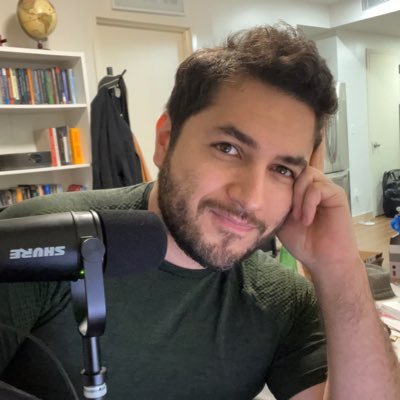
Andres Bernal, Finance Module Facilitator
Andres Bernal, a former advisor to Rep. Alexandria Ocasio-Cortez, a Lecturer of Urban Studies at CUNY Queens College and Doctoral student at The New School For Public Engagement, Division of Policy Management and Environment. His research focuses on the Green New Deal as a site of political communication and policy analysis. Andrés is a leading voice and proponent associated with the heterodox school of economic thought known as Modern Monetary Theory. He is a Research Fellow at the Global Institute for Sustainable Prosperity and a Visiting Research Fellow at the University of Missouri Kansas City Department of Economics. In the Summer of 2017, Andrés began supporting the Congressional campaign of former colleague Alexandria Ocasio-Cortez as a policy advisor and organizer. His work facilitated the incorporation of the Federal Jobs Guarantee policy onto the official campaign platform. He is facilitating Module 7: Democratizing Money and Finance for the Great Transition

Christine Clark, CCEDNET/STARCAP Community Facilitator
Christine is the Program Manager for the Synergia Transition and Resilience Climate Action Program (STARCAP), a partnership between the Canadian Community Economic Development Network (CCEDNet), Synergia Institute and Athabasca University with funding from Environment and Climate Change Canada. STARCAP’s objective is to support climate action at the local level. Over the three-year program, STARCAP offers financial support to select Canadian organizations, who recruit members from their communities to take the MOOC and engage in study circles to discuss learnings and action groups to undertake a local climate initiative.
Christine is also co-founder of Freedom Dreams Co-operative Education, a co-operative development and education hub that shares knowledge and resources about co-operatives and the solidarity economy from a Black, Indigenous and Person of Colour (BIPOC) perspective, and an instructor at CoopZone’s Co-op Development Training Program, where she provides training to the next generation of co-op developers in Canada.

Carolina Carvalho, Small Group Facilitator
Carolina Carvalho is a Portuguese ecologist with a particular interest in the interconnectedness of living beings and how to apply this knowledge to human society. She joined the Synergia MOOC in 2023 as the Small Group Facilitator. Carolina will be joining us for the Orientation and supporting small groups again this year. You can reach out for any help to get started collaborating (em português ou espanhol também)!
She has a BSc in Environmental Biology and MSc in Natural Resource Management and Conservation. Carolina is accelerating our transition to a regenerative future as Activation Team member at the Global Regeneration CoLab (GRC), Data Scientist at African Data Technologies and Permaculture Designer at Kumano Shindo GIA.

Dan Wilton, Athabasca University Technical Support
Dan is an instructional designer and analytics specialist for MOOCs and other online initiatives at Athabasca University, and has over twenty years’ experience as an online instructor. He is a co-author of several articles on inquiry-based MOOCs, as well as the open-access Guide to Blended Learning. Dan is currently completing his doctoral studies into educational research collaboration at Athabasca.

Aileen Ling, Makeshift Commons, Design and Technical Support
Aileen Ling (she/her) is an interdisciplinary designer with a Bachelor of Architectural Studies and an MA in Design for Cultural Commons. She is interested in exploring how “design” and its relevant disciplines can support transition in diverse contexts, from grassroots sustainability initiatives and entrepreneurship/co-operative development, to tactical urbanism and community design builds. She is a co-founder of Makeshift Commons and currently training to become a co-operative developer with CoopZone.

Nam Hoang, Makeshift Commons, Design and Technical Support
Nam Hoang (he/him) is a designer, strategist, and researcher with a background in foresight and systems thinking, human-centred design, architecture, and motion design. He is the founder of Makeshift Collective, a shared studio space for designers, artists, and fabricators. In both his professional and community work, Nam uses design to create more equitable futures rooted in civic empowerment. He is a co-founder of Makeshift Commons and is currently completing his MDes in Strategic Foresight and Innovation.

Don McNair, Editor
Don McNair has 30 years experience in the editing, formatting, and publishing of materials about community economic development (CED), social enterprise, and co-operatives, for practitioners and the general public. Since turning to self-employment in 2012, he has also grown very active in local history as a researcher, writer, and layout artist. He and his wife Kari live in Vernon, BC. They have two adult children. Don is also a Sunday School teacher. He finds time with kids to be a great way to become more proficient in the use of language.
Thank you
We would like to thank Good Futures Collective and Eviance for their work evaluating the 2023 MOOC and STARCAP Project.
We would like to thank Dr Lorelei Hanson, Athabasca University who was Managing Partner with STARCAP in 2021 and 2022 and Dr. Leigh Brownhill, Athabasca University, who together oversaw and carried out the first rounds of evaluation and monitoring activities for the MOOC project.
Strategic Partners 2024
Athabasca University and the Master of Arts Interdisciplinary Studies, Canada
The Canadian Community Economic Development Network (CCEDNET), Canada
CCEDNET Community Partners in 2024 MOOC
Previous CCEDNET Community and Network Partners 2022 and 2023 MOOC
- Black Eco Boom
- Centre for Local Prosperity/ The Deanery Project
- Eviance / Canadian Centre for Disability Studies
- Milton Parc Citizen’s Committee (MPCC) / SEIZE/ Sierra Club Qb/ Montréal Climate Coalition
- Social Economy through Social Inclusion (SETSI)
- St. James Town Community Co-op
- Transition Kamloops
New Dawn Enterprises
British Columbia Cooperative Association
Network Partners
Makeshift Commons, Canada
The Next Economy, Australia
United Diversity, UK
Key Collaborators 2023
Post Carbon Institute and Think Resilience, USA
Shareable, People-powered solution for the common good, USA & International
The Democracy Collaborative, USA
Social Solidarity Network Europe, Europe
Socio.org, solidarity documentation centre. 26,000 documents in 5 languages
International Centre for Co-operative Management, St. Marys University, Canada
Behind the Lines Podcast, Australia
Global University for Sustainability, International
Catalyze Network, New Zealand
Civil Diplomacy Center – North and East Syria, Syria
and, the support of 2000 Synergia Alumni
Study Circle Organizers
Ken Ross, New Zealand – 3 study circles centered in a rural district on the far north of New Zealand
Scotty Foster, Australia – Canberra group – many roles and a veteran of this MOOC
The Next Economy, Australia – Their whole staff is taking the MOOC
The Canadian Community Economic Development Network and Community Partners, Canada
Kevin Flanagan, SolidNetwork, Ireland
Stuart Boothman, Just Transition Wakefield, UK
Josef Davies-Coates, United Diversity, UK
North and East Syria Civil Diplomacy Centre- Rojava study circles
Meraki, Greece